What “carbon fiber” actually means
Two spoilers can both be described as carbon fiber while using different manufacturing methods, construction, and finishing processes. For exterior automotive parts, one of the most common distinctions you’ll see is dry carbon vs wet carbon.
What is dry carbon fiber?
Dry carbon typically uses pre-impregnated carbon fiber material (prepreg), where the resin is already controlled within the carbon material before curing. The part is then cured under controlled conditions.
- More controlled resin content
- Lightweight construction
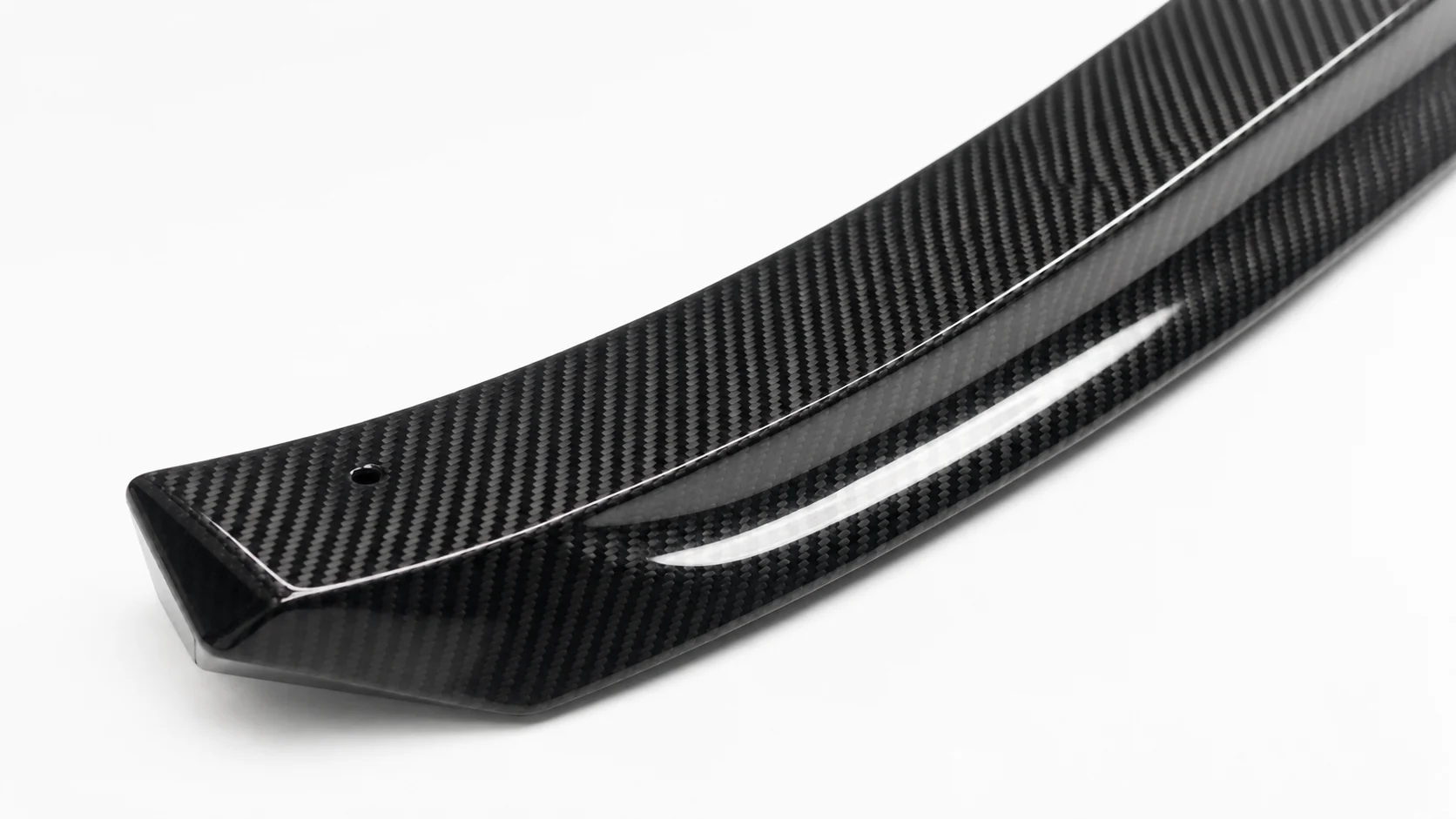
- Clean carbon weave appearance
- High structural consistency
- A premium finished surface when manufactured correctly
What is wet carbon fiber?
Wet carbon generally refers to a process where resin is applied to the carbon fiber during manufacturing rather than being pre-impregnated into the material. It can still produce attractive and functional automotive parts.
The main difference is the manufacturing process, not simply whether the finished product looks glossy or matte.
Does dry carbon always mean better?
Not automatically. Material choice is only one part of a good carbon fiber component.
- Fitment — does the part align properly with the vehicle?
- Surface finish — is the clear coat consistent and well finished?
- Weave appearance — does the visible carbon pattern look clean across the part?
- Edges and mounting areas — are the areas you don’t immediately see also properly finished?
Glossy vs matte is not dry vs wet
A glossy carbon part isn’t automatically wet carbon, and a matte part isn’t automatically dry carbon. Gloss or matte describes the surface finish. Dry or wet carbon describes how the composite is manufactured. Treat them as two separate decisions.
When dry carbon makes sense
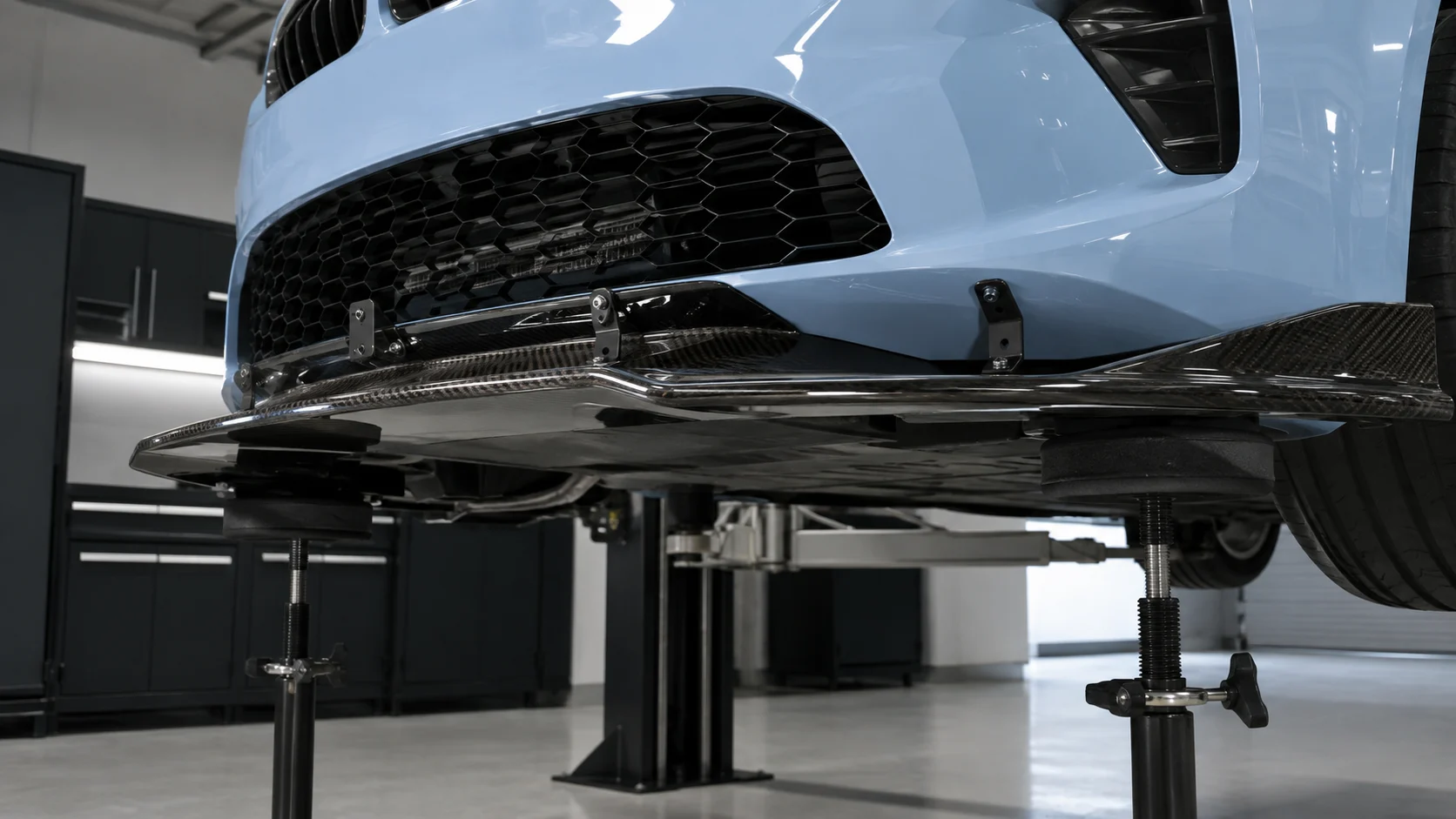
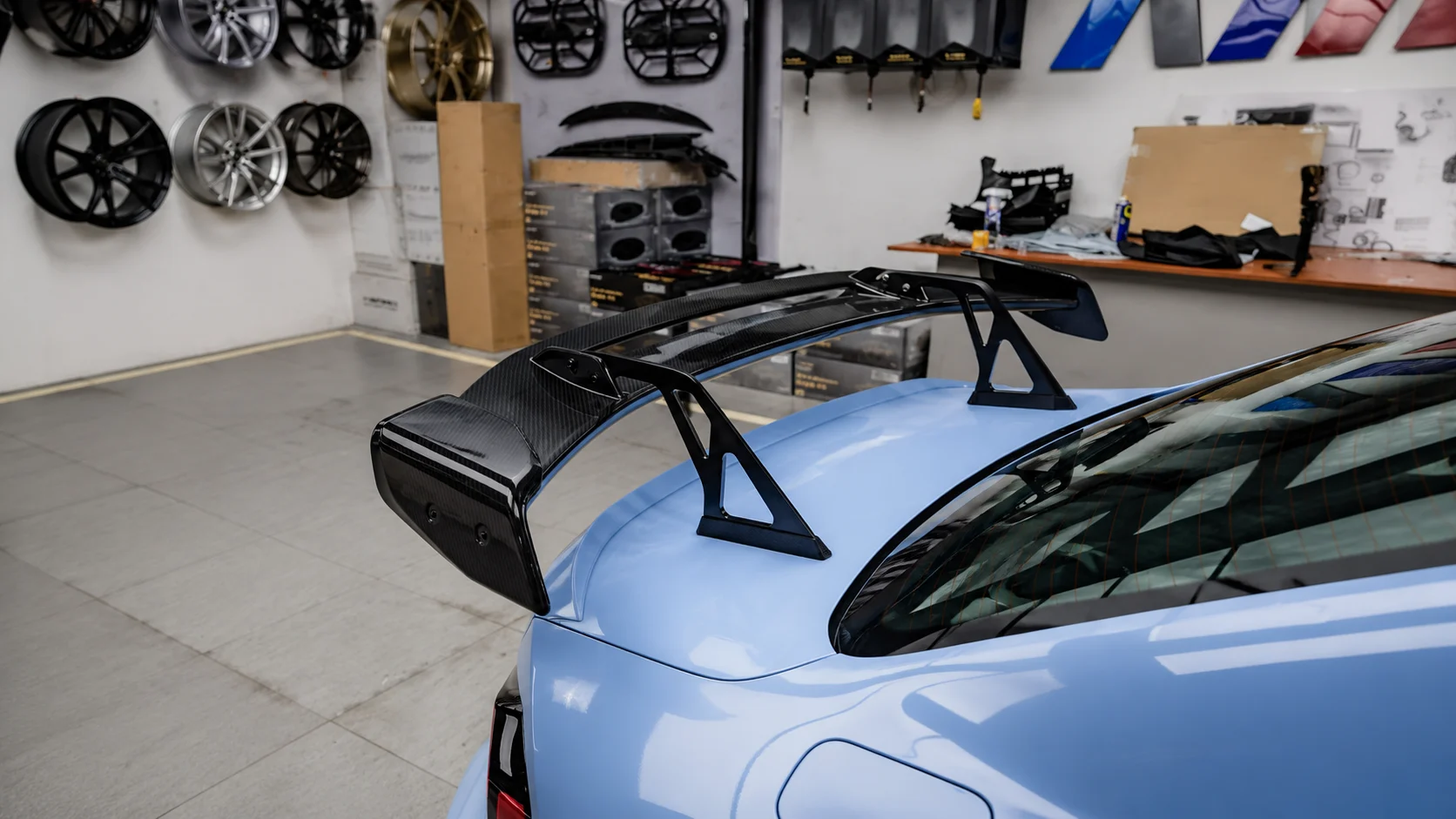
Dry carbon is particularly attractive when the carbon itself is meant to be part of the visual character of the build — spoilers, diffusers, front lips, side skirts, and other exposed exterior components.
For most street builds, material shouldn’t be considered in isolation. Good fitment, finish, and design matter just as much as the carbon specification printed on the product page.
MKAACF’s current product range focuses primarily on dry carbon fiber exterior components for enthusiast vehicles, with attention to fitment, visible finish, and integration with the vehicle’s original design.